
Table of Contents
Understanding On-Site Fleet Repair
In the fast-paced world of commercial trucking, downtime can cost fleets thousands of dollars per hour. Imagine a fleet manager stranded on the roadside with a critical brake failure, delaying deliveries and inflating operational expenses. At Allington Industries, we recognize these challenges and deliver On-site fleet repair across the Wasatch Front, minimizing disruptions through proactive solutions.
On-site fleet repair involves our technicians providing mobile fleet maintenance directly at your yard, job site, or warehouse. This field-based vehicle servicing reduces vehicle downtime by up to 50% compared to traditional shop visits, according to industry benchmarks. It also yields significant cost savings by avoiding towing fees and lost productivity. Key benefits include swift on-site truck repair for issues like no-starts or check-engine lights, ensuring compliance and efficiency. We adhere to TMC Recommended Practices for preventive protocols, such as regular oil changes and DOT inspections, which we define as Department of Transportation safety checks to keep vehicles roadworthy.
We at Allington Industries specialize in On-site Preventative Maintenance & Repairs for light- to heavy-duty vehicles, including trucks, trailers, skid steers, and excavators. Our we come to you approach covers oil and filter services, brake repairs, steering and suspension work, and emergency diagnostics with 24/7 availability. Whether it is fluid top-offs or cooling system fixes, You Use It We Fix It! with location-specific fleet diagnostics tailored to your needs.
This guide explores the fundamentals of on-site solutions, deep dives into techniques, practical tips for implementation, and advanced strategies to optimize your fleet operations.
Fundamentals of Mobile Fleet Maintenance
At Allington Industries, we specialize in on-site fleet repair, delivering essential services that keep your commercial vehicles running smoothly without the need for off-site towing. Mobile fleet maintenance in the Wasatch Front involves proactive care for light, medium, and heavy-duty trucks, trailers, and equipment directly at your location, whether at a warehouse, job site, or yard. This approach, often called convenient vehicle upkeep, ensures minimal downtime and supports efficient operations for businesses relying on reliable transportation.
Definitions and Core Services
Mobile fleet maintenance refers to the comprehensive care of vehicle fleets performed on-site, encompassing preventive measures to avoid breakdowns and extend asset life. Our services at Allington Industries include oil and filter changes, DOT-ready inspections, fluid checks and replacements for coolants and transmissions, belt and hose replacements, battery service, and tire maintenance. For instance, we handle basic diagnostics for electrical issues or check-engine lights using mobile scan tools. These fundamentals form the backbone of direct-site servicing, preventing minor issues from escalating into costly repairs. By focusing on these essentials, we help fleets maintain compliance and performance standards as outlined in industry guidelines.
On-Site Processes
The process of on-site truck repair begins with easy scheduling through our team, where we assess your fleet’s needs via phone or online request. Upon arrival at your location, our technicians conduct an initial inspection to identify required services, such as fluid top-offs or belt replacements. We then perform the work efficiently using specialized mobile equipment, ensuring all tasks meet safety protocols. Completion involves a thorough test and cleanup, with detailed reports provided for your records. This streamlined approach, embodied in our motto we come to you, eliminates travel time for vehicles and integrates seamlessly into your daily operations, often resolving issues in hours rather than days. For example, a routine warehouse fluid check might involve topping off transmission fluid and inspecting hoses on multiple units in one visit, keeping your fleet operational without interruption.
Benefits of Mobile Fleet Maintenance
Opting for mobile fleet maintenance offers significant advantages, including cost efficiency by reducing towing fees and lost productivity from downtime. Safety compliance is enhanced through regular DOT inspections, which align with FMCSA requirements to prevent accidents and regulatory fines. Our on-site preventative maintenance and repairs ensure vehicles remain roadworthy, minimizing unexpected breakdowns and extending overall fleet longevity. Businesses in the Wasatch Front benefit from our 24/7 emergency availability, providing peace of mind for urgent needs. Additionally, this service supports environmental goals by optimizing fuel efficiency through timely maintenance like oil changes. Ultimately, these benefits translate to smoother logistics and higher operational reliability, allowing your team to focus on core activities rather than vehicle hassles.
Preventive maintenance is crucial for distinguishing needs across vehicle types. The following table compares standard protocols for light-duty versus heavy-duty vehicles, drawing from TMC Recommended Practices for frequency guidelines and FMCSA standards for inspections.
| Task | Light-Duty Vehicles | Heavy-Duty Vehicles | Frequency |
|---|---|---|---|
| Oil & Filter Change | Every 5,000 miles | Every 10,000 miles (includes synthetic oils for extended intervals) | As per manufacturer |
| DOT Inspections | Annual | Semi-annual for commercial use (includes brake and suspension checks) | Per FMCSA guidelines |
| Fluid Top-Offs | Monthly checks | Bi-weekly for high-mileage fleets (covers coolant, transmission) | Ongoing |
Data sourced from FMCSA guidelines and TMC practices for accuracy in fleet planning. Light-duty vehicles, like delivery vans, require less intensive intervals to match moderate usage, while heavy-duty trucks demand more frequent checks to handle demanding loads and miles. This differentiation helps fleet managers prioritize tasks effectively, ensuring compliance and reliability tailored to operational scale. For instance, semi-annual DOT inspections for heavy-duty units, as per the CSA FMCSA Safety Planner, include detailed brake evaluations to uphold safety standards.
Focus on Trucks and Trailers
When it comes to trucks and trailers, mobile fleet maintenance takes on added importance due to their role in commerce. We service semis, trailers, and heavy equipment like skid steers and excavators with specialized repairs for brakes, steering, suspension, cooling, and fuel systems. On-site truck repair addresses common issues such as no-start conditions or alternator failures directly at the job site, using our You Use It We Fix It! philosophy. For trailers, we perform inspections and adjustments to ensure safe hauling. Early diagnostics detect problems like electrical faults, preventing cascade failures in high-stakes environments. In the Wasatch Front, our expertise supports diverse fleets, from local deliveries to long-haul operations, fostering sustained performance and regulatory adherence. This foundational care sets the stage for advanced topics, such as in-depth diagnostics and emergency interventions explored in subsequent sections.
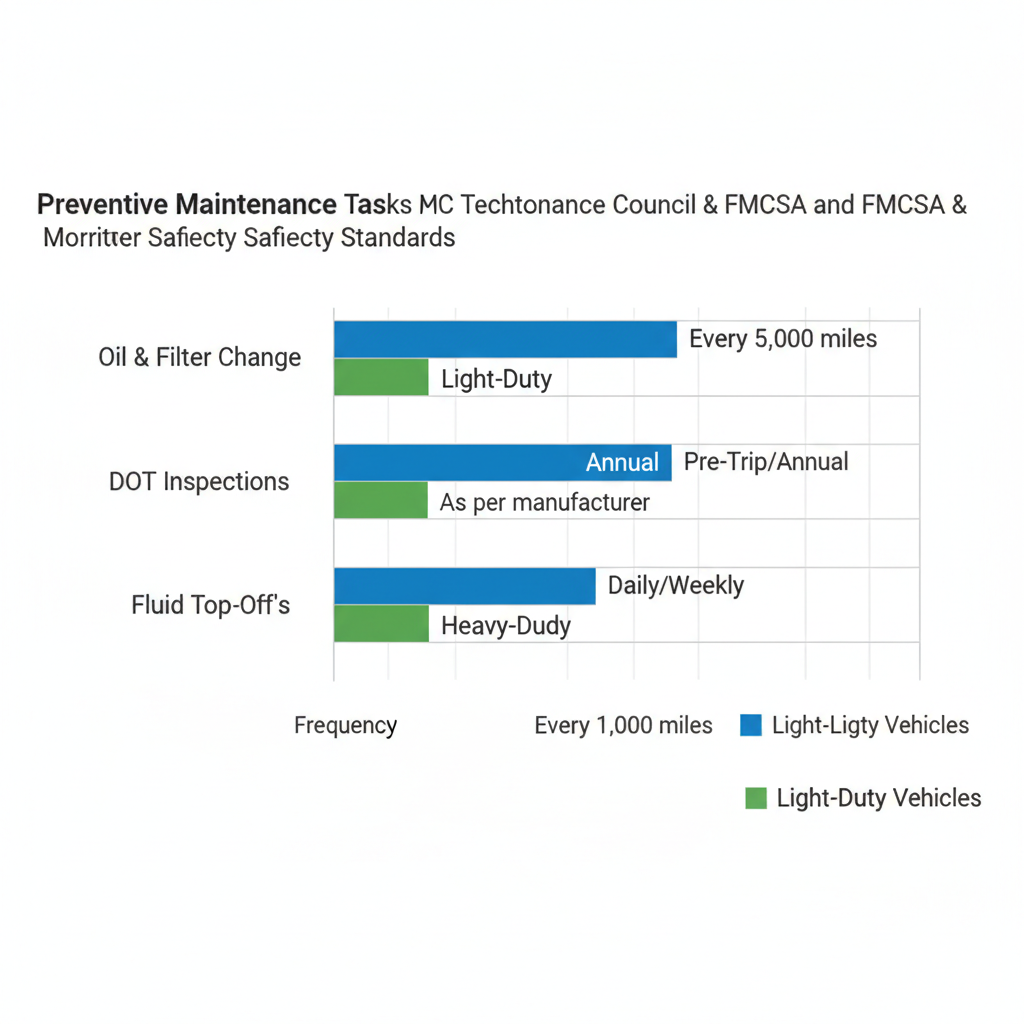
Comparison of preventive maintenance protocols for vehicle fleets
Understanding these basics empowers better fleet management; for deeper insights into our comprehensive solutions, continue to the next section on advanced services.
Deep Dive into On-Site Diagnostics and Repairs
At Allington Industries, we specialize in on-site fleet repair to keep your commercial operations running smoothly without the hassle of towing vehicles to a shop. Our mobile fleet maintenance services bring advanced diagnostics and repairs directly to your location, minimizing downtime and ensuring safety compliance. We come to you with the tools and expertise needed for efficient resolutions.
Electrical and Engine Diagnostics
Our team excels in electrical and engine diagnostics using state-of-the-art mobile scan tools. For no-start conditions, we begin with a visual inspection of the battery, connections, and wiring harnesses. Then, we connect our diagnostic scanners to retrieve error codes and monitor live data from sensors. This in-field troubleshooting allows us to pinpoint issues like faulty alternators or starter motors quickly. Check-engine lights often signal emissions or drivability problems, which we address through comprehensive scans that reveal oxygen sensor failures or fuel trim imbalances.
Emphasizing quick resolution at the site, we carry replacement parts for common fixes, enabling same-day corrections. According to the Fullbay State of Heavy-Duty Repair Report, on-site diagnostics can reduce average downtime by up to 40% compared to traditional shop visits. We integrate AI FMCSA SMS data to validate repairs, ensuring reduced violations in safety metrics post-service. This approach not only saves time but also enhances fleet reliability.
The following table compares common on-site diagnostic tools we use for fleet issues:
| Tool Type | Capabilities | Best For | Limitations |
|---|---|---|---|
| OBD-II Scanner | Reads codes, monitors sensors | Light-duty engines, basic electrical | No heavy-duty support |
| Heavy-Duty JPRO | Full system scans, ABS, emissions | Trucks and trailers, drivability issues | Requires subscription |
These tools enable precise in-field troubleshooting, with the JPRO excelling in complex heavy-duty scans while the OBD-II suits quicker light-duty checks. Selecting the right tool based on vehicle type ensures faster issue resolution and compliance with FMCSA standards.
Mechanical Repair Techniques
In mechanical repair techniques, we focus on site-specific mechanical fixes for brakes, steering, cooling, and fuel systems in commercial fleets. For brake repairs, our technicians assess pads, rotors, and calipers on-site, replacing worn components to restore safe stopping power. Steering and suspension work involves aligning wheels and repairing tie rods or shocks, preventing uneven tire wear and handling issues.
Cooling system repairs address radiator leaks or thermostat failures by flushing lines and replacing hoses with high-quality parts we carry. Fuel system diagnostics and fixes, such as cleaning injectors or replacing pumps, tackle contamination or pressure drops that cause performance lags. Alternator and starter repairs are common, where we test output and swap units to avoid stranding. Our on-site truck repair in nearby areas incorporates DOT-ready inspections during these services for added value.
Consider a case study: A local logistics firm experienced a semi-trailer brake failure during peak hours. Our 24/7 emergency after-hours mobile service arrived within two hours, diagnosed the seized caliper, and completed the repair on-site, saving the client from a full-day shutdown and potential FMCSA violations.
You Use It We Fix It! with our comprehensive toolkit minimizes disruptions. The table below outlines service types versus applicable vehicles:
| Service Type | Light-Duty Vehicles | Medium-Duty Vehicles | Heavy-Duty Vehicles/Equipment |
|---|---|---|---|
| Brake Repair | Yes | Yes | Yes (semi-trailers) |
| Steering & Suspension | Yes | Yes | Yes (excavators) |
| Cooling System | Yes | Yes | Yes (compressors) |
| Fuel System | Yes | Yes | Yes (skid steers) |
This comparison highlights our versatility across vehicle classes, drawing from TMC reports on repair efficacy. Light-duty services prioritize quick fluid checks, while heavy-duty ones emphasize robust component swaps, all aligned with safety protocols to boost operational efficiency.
Trailer and Equipment Service
Our trailer and equipment service extends mobile fleet maintenance to semis, skid steers, excavators, and compressors under field conditions. For semis and semi-trailers, we perform landing gear adjustments, axle alignments, and suspension checks to handle heavy loads safely. Skid steers receive hydraulic system flushes and track tensioning, ensuring maneuverability on job sites.
Excavators benefit from boom and bucket repairs, including pin replacements and fluid services, while compressors get belt drives and pressure regulator fixes. These on-site interventions prevent breakdowns in remote areas, with our team equipped for DOT inspections and battery services. By addressing wear early, we reduce long-term costs and maintain productivity. Emergency after-hours support ensures we are available when you need us most, integrating seamlessly with your daily operations.
Practical Implementation of Fleet Maintenance
Implementing on-site fleet repair effectively requires strategic planning to minimize downtime and control costs. At Allington Industries, we specialize in delivering allington industries manufacturing services that integrate seamlessly into your operations, focusing on preventive care and rapid response for commercial trucks along the Wasatch Front.
Scheduling and Cost Management
Effective scheduling begins with establishing a preventive maintenance calendar tailored to your fleet’s usage patterns. We recommend quarterly inspections for light-duty vehicles and bi-monthly for heavy-duty trucks to catch issues early, aligning with DOT guidelines. For emergencies, our 24/7 mobile fleet maintenance service ensures technicians arrive within hours, reducing unplanned outages.
Cost management hinges on service tiers, fleet size, and frequency. Basic oil and filter changes might run $150 per vehicle, while comprehensive DOT-ready inspections add $200-300, scaling with fleet volume for bulk discounts. For a 20-truck fleet, annual expenses could total $30,000 for on-site truck repair, far below in-house alternatives when factoring facility overhead.
The following table compares key aspects of in-house versus on-site maintenance to highlight potential savings:
| Aspect | In-House | On-Site Mobile | Savings Potential |
|---|---|---|---|
| Annual Cost | $50,000+ for shop setup | $30,000 for services | No facility needed; 20-40% reduction in downtime costs |
| Downtime per Repair | 4-8 hours travel + wait | 1-2 hours on-site | Direct at location; up to 50% less lost productivity |
Derived from FMCSA and TMC data on fleet efficiency, this comparison shows how on-site approaches cut indirect costs like lost productivity. For instance, a single day’s downtime for a semi-truck can exceed $1,000 in revenue loss; our model slashes that by performing practical site servicing right at your yard or job site. By prioritizing preventive schedules, operators can further optimize budgets, achieving up to 25% long-term expense reduction through early issue resolution.
Best Practices for Fleet Operators
Integrating mobile fleet maintenance starts with vendor selection: evaluate certifications via the SAFER FMCSA Query tool, ensuring providers like us maintain clean safety records. Check AI FMCSA SMS results for low violation rates; Allington Industries consistently scores high, reflecting our commitment to compliance. Prioritize vendors offering On-site Preventative Maintenance & Repairs with capabilities for brakes, steering, and diagnostics on heavy equipment.
Actionable tips include:
- Develop a digital tracking system for maintenance logs to automate reminders.
- Train staff on basic checks like fluid levels to complement professional visits.
- Negotiate service contracts with escalation clauses for emergencies, ensuring we come to you reliability.
For service provider comparison, consider response time and coverage:
| Provider Type | Response Time | Coverage Area | Key Benefit |
|---|---|---|---|
| Local Specialist (e.g., Allington) | 1-2 hours | Wasatch Front & beyond | 24/7 emergency; You Use It We Fix It! versatility |
| National Chain | 4-6 hours | Limited local | Standardized parts; higher fees |
This table, informed by FMCSA safety metrics, underscores choosing operators with proven low-incident rates for operational vehicle care. We advise piloting services on a subset of your fleet to test integration, then scaling based on metrics like repair turnaround. Emphasize multi-vehicle scheduling to batch visits, minimizing disruptions and enhancing efficiency for commercial operations.
Side-by-side infographic comparing in-house and on-site fleet maintenance costs and downtime
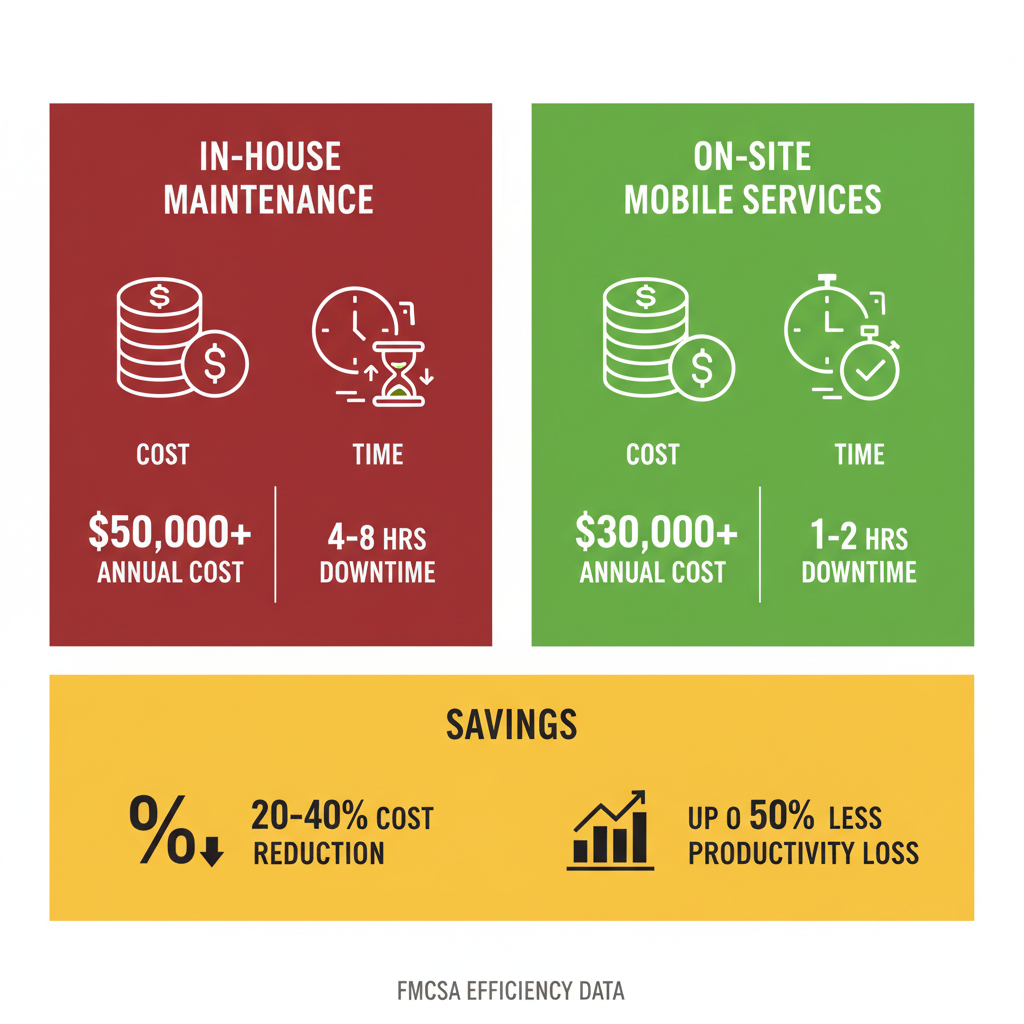
Infographic showing cost savings of on-site mobile fleet maintenance versus in-house
Building on these visuals, operators should review quarterly reports to refine strategies, ensuring sustained cost controls and vehicle reliability.
Local Service Availability
In the Wasatch Front region, reliable on-site fleet repair providers abound, with Allington Industries covering Salt Lake City to Ogden and beyond. Use FMCSA tools to verify credentials: search USDOT numbers via SAFER for active status and SMS for safety snapshots, confirming emergency options like our after-hours response.
To find providers, start with local directories or referrals from trucking associations, prioritizing those with mobile diagnostics for no-start issues or check-engine lights. We offer trailer maintenance and heavy-equipment service for skid steers and excavators directly on-site in Utah, ensuring minimal travel for your team. For urgent needs, request 24/7 service to keep operations rolling without relocation hassles.
Advanced Fleet Repair Strategies
At Allington Industries, we specialize in advanced on-site fleet repair strategies tailored for heavy-duty applications across the Wasatch Front. These sophisticated approaches address the unique demands of job-site conditions, ensuring minimal downtime for commercial fleets. By leveraging complex diagnostics and specialized protocols, we handle everything from semis to excavators with precision and efficiency.
Our strategies for trucks and semis begin with advanced engine service, where we perform in-depth diagnostics using mobile scan tools to identify issues like no-start conditions or drivability problems. Fuel system repairs involve precise diesel injection tuning, essential for maintaining optimal performance under heavy loads. We also conduct hydraulic checks on trailers to prevent leaks that could compromise safety during transport. One key challenge is remote site access, requiring our team to navigate uneven terrain with portable equipment kits. Mobile fleet maintenance in these scenarios not only reduces haul-back costs but also keeps operations running smoothly, as evidenced by industry trends showing up to 25% higher efficiency in field interventions.
For heavy equipment such as skid steers, excavators, and compressors, our protocols emphasize heavy-duty site solutions. Hydraulic system maintenance is critical; according to TMC Recommended Practices, regular inspections of high-pressure lines can prevent 40% of catastrophic failures by detecting wear early. An example is our recent excavator repair on a construction site near Ogden, where we replaced damaged hydraulic seals using specialized torque tools while the machine remained operational nearby. Cooling system overhauls address dust accumulation common in job sites, incorporating radiator flushes and engine diagnostics to sustain peak performance. These specialized field interventions mitigate risks like overheating, ensuring equipment reliability in demanding environments.
The following table compares repair approaches for trucks and job-site machinery, highlighting differences in components and challenges:
| Component | Trucks/Semis | Heavy Equipment (e.g., Excavators) | On-Site Challenges |
|---|---|---|---|
| Fuel System | Diesel injection tuning | Hydraulic lines high-pressure repairs | Access at uneven sites |
| Cooling System | Radiator flushes | Engine overhauls with specialized tools | Dust and debris exposure |
Insights from the Fullbay State of Heavy-Duty Repair Report underscore the value of these tailored strategies, noting that proactive on-site measures reduce equipment failure rates by over 30% in fleet operations.
We integrate these advanced techniques with our 24/7 emergency services, providing after-hours on-site truck repair by request to tackle urgent issues swiftly. This seamless approach answers common queries about emergency protocols and regional coverage, offering clear advantages like faster turnaround and cost savings for multi-vehicle fleets in the Wasatch Front area.
Frequently Asked Questions on Fleet Services
Fleet operators often seek quick answers to common queries about on-site fleet repair, especially regarding costs and emergency options. This FAQ addresses key concerns, drawing on our expertise at Allington Industries in the Wasatch Front area.
What factors influence the cost of on-site fleet repair?
Costs depend on repair complexity, vehicle type, and location. We provide transparent estimates for mobile fleet maintenance services, typically ranging from $150 to $500 per visit, ensuring no hidden fees.
How can I find reliable on-site truck repair near me?
Search for certified providers in your region, focusing on those with 24/7 availability. In the Wasatch Front, we offer prompt on-site truck repair to minimize downtime for commercial fleets.
What is the typical response time for emergency fleet services?
Our emergency response aims for under two hours, aligning with FMCSA safety standards for rapid intervention. This quick action prevents extended disruptions and ensures compliance during urgent repairs.
What are the advantages of on-site truck repairs for commercial vehicles?
On-site services reduce towing costs and vehicle downtime, allowing immediate return to operations. We handle brakes, diagnostics, and more directly at your site, boosting efficiency for heavy-duty trucks.
Who are some of the best mobile fleet maintenance companies in the US?
Top providers include regional specialists like Allington Industries, known for comprehensive services across light- to heavy-duty vehicles. We prioritize preventive care to extend fleet longevity nationwide.
How does maintenance vary for different fleet types at Allington Industries?
We tailor mobile fleet maintenance for semis, skid steers, and trailers, including DOT inspections per CSA FMCSA guidelines. Our approach ensures all equipment meets safety standards while minimizing operational interruptions.
These insights highlight the benefits of proactive fleet care, setting the stage for enhanced reliability in your operations.
Maximizing Fleet Efficiency with On-Site Repair
In summary, on-site fleet repair stands as a cornerstone for efficient fleet strategies, enabling us to deliver preventive services, diagnostics, and repairs directly where your vehicles operate. By integrating mobile fleet maintenance and on-site truck repair, we minimize downtime and enhance safety across the Wasatch Front.
These optimized vehicle care approaches yield significant benefits, including reduced operational disruptions and improved compliance with industry standards like TMC Recommended Practices. Our strategies ensure sustained fleet health and cost-effective performance.
Contact Allington Industries today to implement these efficient fleet strategies and keep your operations running smoothly with we come to you service.